


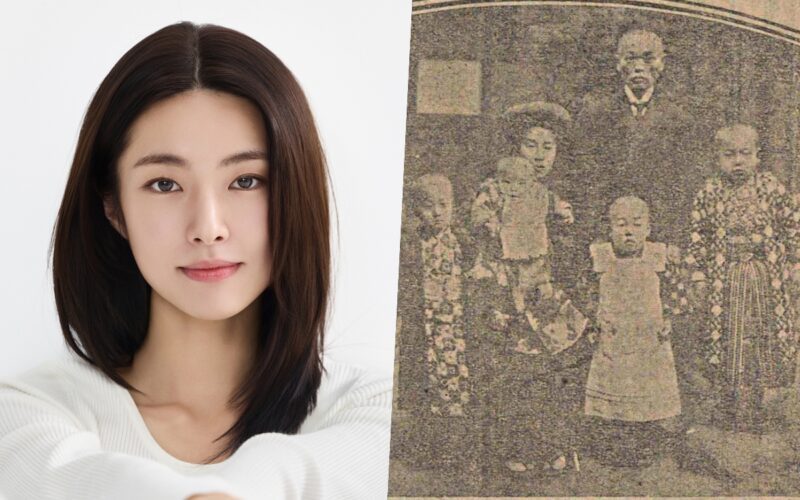
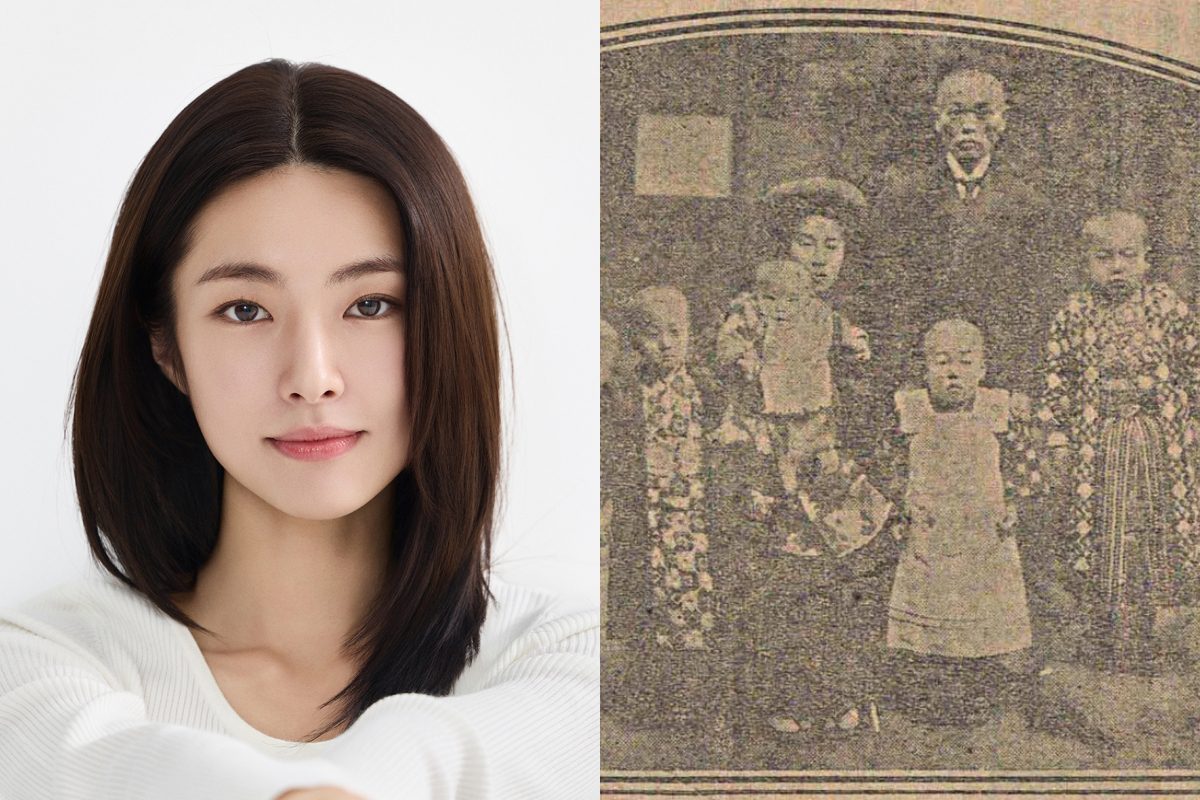
Additional allegations surrounding actress Ha Young’s great-grandfather Ahn Sang Ho have emerged, including a reported connection to Gu Yeon Soo, a Korean collaborator linked to the 1895 assassination of Empress Myeongseong.
Beyond the previously raised accusations of pro-Japanese activities, new attention has been drawn to Ahn Sang Ho’s connections during his time in Japan and the circumstances surrounding his marriage to his Japanese wife, Isoko Kawaguchi.
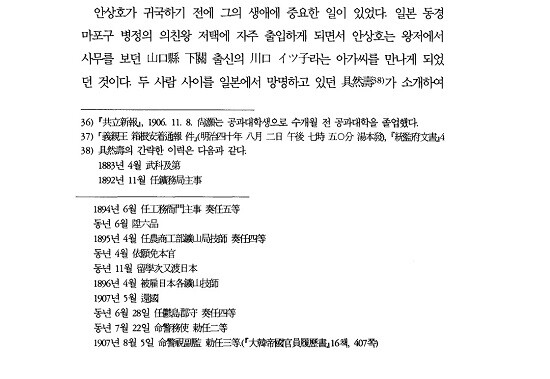
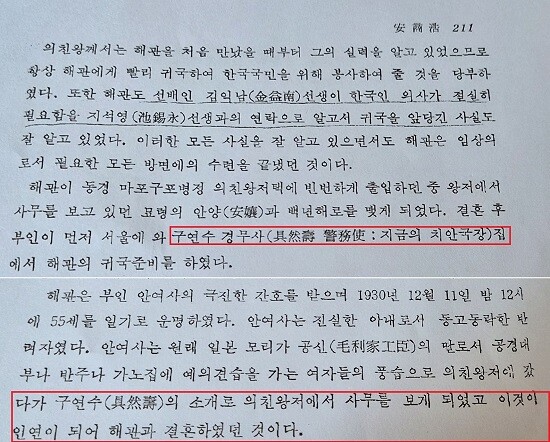
Ilyos Hinmun reported that Gu Yeon Soo was involved in introducing Ahn Sang Ho and Isoko Kawaguchi, who later married.
A paper titled “The Life and Activities of Ahn Sang Ho, the First Modern Practitioner,” published in the Journal of Korean Independence Movement Studies No. 53 in 2007, states that Ahn Sang Ho met Kawaguchi while frequently visiting the Tokyo residence of Prince Yi Kang, where she worked.
The paper states, “Gu Yeon Soo, who had been living in exile in Japan, introduced the two, eventually leading to their marriage.”
Gu Yeon Soo is known as one of the Korean collaborators involved in the Assassination of Empress Myeongseong. The book “99 Pro-Japanese Collaborators,” published by the Institute for Research on Pro-Japanese Collaborators, also states that Gu Yeon Soo supervised the burning of Empress Myeongseong’s body following her assassination.
After returning from exile in Japan, Gu Yeon Soo held several government positions, including serving as a council member of the pro-Japanese organization Iljinhoe, governor of Uldo County, a police official under Japan’s Residency-General and later a member of the Privy Council under the Japanese colonial government. The Korean historical organization Iljinhoe is also referred to as the Advancement Society or Progressive Society. Active from 1904 to 1910, it was a major pro-Japanese political group during the late Korean Empire that advocated for Japanese-Korean merger and reform.
The connection between Ahn Sang Ho and Gu Yeon Soo is also mentioned in other historical sources. According to “Pioneers of Korean Medicine” (1985) by medical figure Jung Gu Chung, Isoko met Kawaguchi Ahn Sang Ho through Gu Yeon Soo’s introduction while staying at Prince Yi Kang’s residence.
The book also states that Kawaguchi arrived in Korea in 1907, before Ahn Sang Ho, to prepare for his return and stayed at Gu Yeon Soo’s home at the time.
Previously, Ha Young’s father told The Daily Sports that he believed Ahn Sang Ho’s marriage to a Japanese woman was arranged through Prince Yi Kang.
“I understand that my grandfather (Ahn Sang Ho) married a Japanese woman after Prince Yi Kang, who was staying in Tokyo at the time, introduced him to a woman working there. I never considered the marriage to a Japanese woman itself to be connected to pro-Japanese activities.”
However, regarding the reported connection between Gu Yeon Soo and Ahn Sang Ho, Ha Young’s side stated, “It is difficult to confirm at this moment.”
Meanwhile, another allegation involving Ahn Sang Ho has also resurfaced that he was connected to the long-standing theory that Emperor Gojong was poisoned.
History instructor Bae Ki Sung discussed the claim on the YouTube channel Maebul Show on August 12th, alleging that Ahn Sang Ho was involved in the circumstances surrounding Emperor Gojong’s death in 1919.
Bae claimed, “When Emperor Gojong collapsed early in the morning on January 21st, 1919, Ahn Sang Ho entered to treat him. The events of the three hours after he entered are a mystery.”
He added, “At the time, rumors circulated among the Korean people that Emperor Gojong was poisoned by Ahn Sang Ho. There are records stating that after drinking a traditional Korean sweet rice drink, Emperor Gojong’s tongue and teeth turned black and his body became swollen.”
Bae also mentioned that two maids who reportedly brought the drink to Emperor Gojong died several days later, citing this as part of the suspicions surrounding the case.
However, historians do not consider the poisoning theory to be a confirmed historical fact. Historian Shim Yong Hwan wrote on social media on August 11th: “While it is true that the theory of Emperor Gojong’s poisoning became a catalyst for the March 1st Movement, it is merely a rumor and is not considered a historical fact.”
He added, “It is not appropriate to label him as a pro-Japanese collaborator simply because he was his physician at the time.”
The controversy began after Ha Young appeared on KBS 2TV’s Problem Child in House on August 7th and introduced herself as coming from a “fourth-generation doctor’s family.” Following the broadcast, it was revealed that her great-grandfather was Ahn Sang Ho (1872–1927), a doctor who worked during the Japanese colonial era, leading to public criticism.
On August 12th, Ha Young posted a handwritten apology on social media, saying: “I bow my head in apology for causing great disappointment and hurt due to matters related to my great-grandfather.”
However, the controversy has continued as further claims and historical discussions surrounding Ahn Sang Ho have emerged.
>> Japanese Media Weighs In on Ha Young’s Pro-Japan Ancestry Controversy
In the meantime, watch trending K-dramas for free on Amasian TV.