



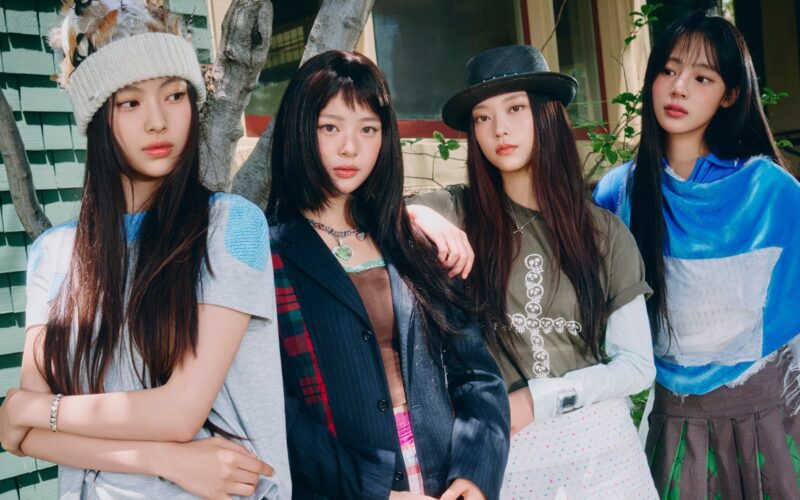

NewJeans members signed exclusive contracts with HYBE subsidiary ADOR as minors, but the agreements allegedly contained specific legal clauses that failed to protect their rights, according to a report by The New York Times.
The New York Times reported on November 5th that it obtained and analyzed the contracts signed by the five members in 2022, when they were between 14 and 17 years old. The newspaper identified several clauses that could infringe on the members’ rights, including a lack of protections for minors, requirements to repay cosmetic procedure expenses, restrictions on personal behavior, a potentially inflated penalty calculation, and clauses allowing ADOR to continue using the members’ names, images and voices after their contracts ended.
The contracts were reviewed by five legal experts. Attorney Noh Jong Eon, a Seoul-based lawyer specializing in entertainment law, described the agreements as “unusually aggressive.”
The contracts lacked provisions designed to protect underage entertainers. South Korea’s standard exclusive contract for artists includes safeguards for their physical and mental health, education, sleep and rest. It also prohibits agencies from forcing artists to engage in excessive exposure or work excessively long hours. However, these protections were absent from the NewJeans contracts.
Experts warned that without such provisions, underage performers could find it difficult to push back against excessive training or work schedules.
The NYT cited sources who said the NewJeans members frequently practiced until 2 AM during their trainee years and were not guaranteed adequate breaks. Four of the five members eventually left school. HYBE denied forcing the members to discontinue their education, stating that it complied with child protection laws.
The contracts also required the members to repay a significant portion of the costs associated with cosmetic surgery and skincare treatments they received during their trainee years.
The NYT cited two sources who said the members were photographed from multiple angles before their debut, after which some were recommended cosmetic procedures. HYBE denied ever requiring the members to undergo plastic surgery or recommending procedures against their wishes.
The agreements also included numerous restrictions on the members’ behavior. Terms such as “insincere attitude,” “inappropriate dating” and “neglect of self-management” were included, despite lacking clear definitions.
Another clause prohibited the members from making public statements that could damage the company’s reputation, regardless of whether the statements were true. Experts said such vague language could give the agency excessive discretion to claim that an artist had breached the contract.
The method used to calculate contractual penalties was also criticized. Under South Korea’s standard artist contract, penalties for a breach are generally calculated by multiplying the artist’s average monthly revenue by the remaining contract period. However, the NewJeans agreements reportedly allowed ADOR to use only months in which revenue was generated, potentially resulting in significantly higher penalties.
HYBE disputed this interpretation, arguing that the members generated revenue every month and that the actual calculations would therefore not differ.
The contracts also allowed ADOR to continue using the members’ names, likenesses, and voices after the agreements expired. Under the standard contract, an agency’s rights to use an artist’s name, image, and voice generally end when the contract expires.
However, the NewJeans agreements reportedly allowed ADOR to retain these rights beyond the contracts’ expiration in 2029 and to license them to third parties. The provisions also covered AI-generated voice replicas and chatbot creation.
Legal experts said it remains unclear how much of these provisions would be enforceable in an actual legal dispute.
The NYT further reported that the contract terms were non-negotiable. In January 2022, when the mother of one member requested changes to the agreement, ADOR’s vice president reportedly responded that the family should reconsider signing the contract if they did not agree with the proposed terms.
All five members’ parents ultimately signed the agreements.
According to the Kyunghyang Shinmun, contracts used by HYBE’s subsidiaries, including the NewJeans agreements, were based on standard contract templates provided by HYBE’s legal team. HYBE told the newspaper on November 5th that the contracts had been prepared through detailed discussions between the label and the artists.
The NYT highlighted the broader issue of child exploitation in the K-pop industry, concluding that “despite years of promised sweeping reforms and government intervention, even NewJeans, one of the most successful groups of its era, saw little change.”
>> Court Orders NewJeans ‘ETA’ MV Director to Pay $748K to ADOR
In the meantime, watch trending K-dramas for free on Amasian TV.
Source (1)